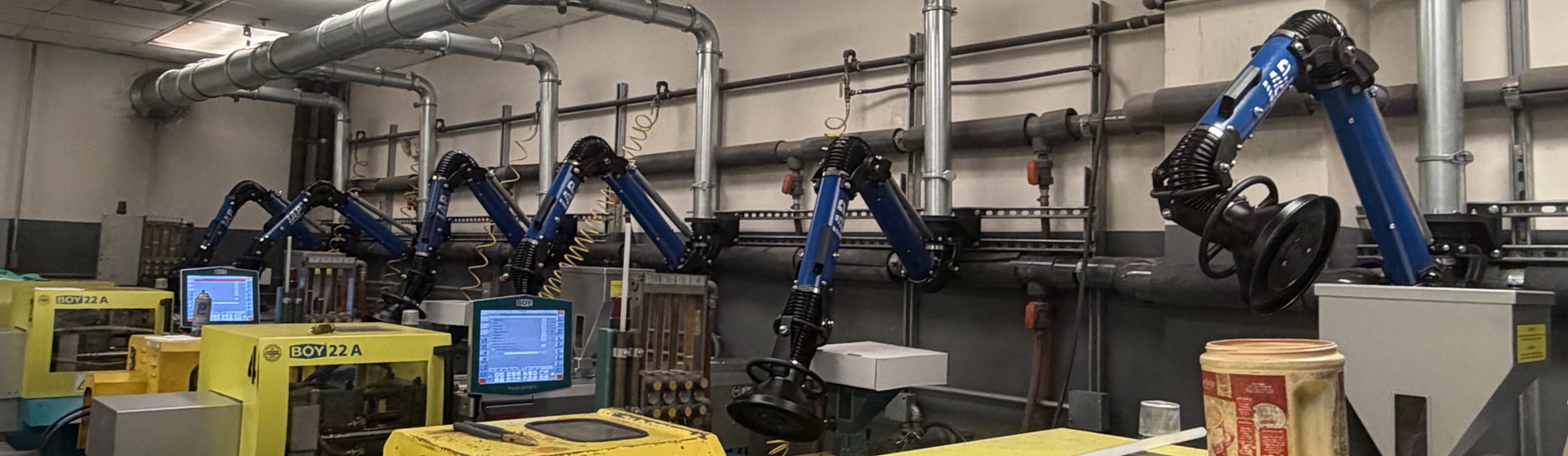
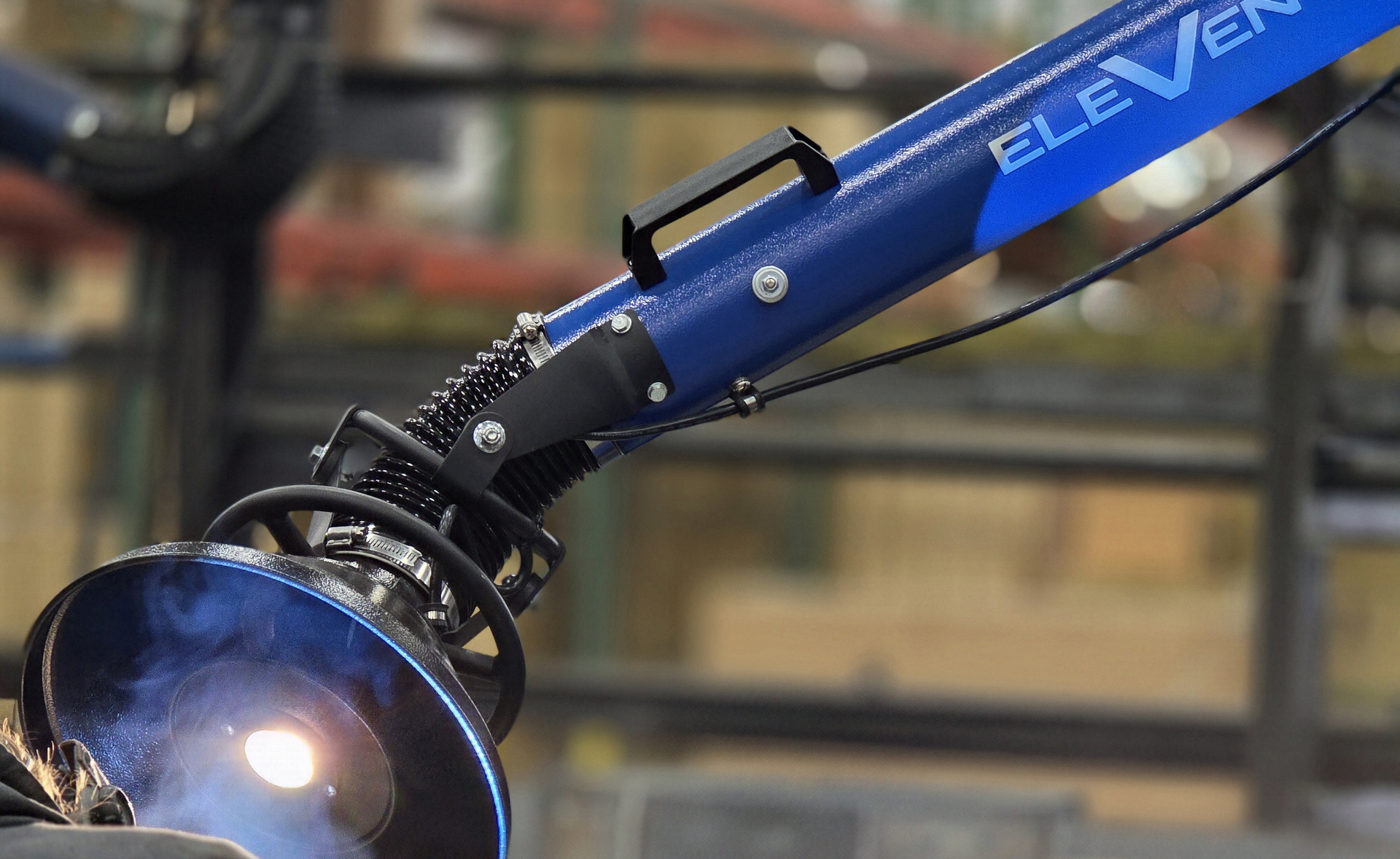
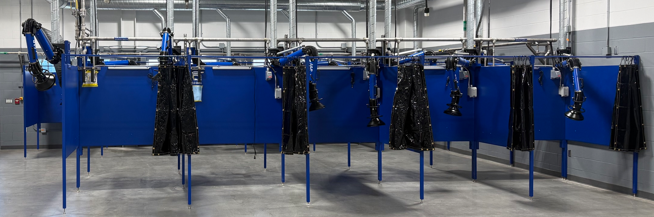
Why Does the Material of a Laboratory Fume Arm Matter?
When comparing laboratory fume arms, it's common to focus on reach, diameter, hood style, mounting options and airflow.
Those are all important.
However, it's also important to look at
what the arm is made from.
Many competing lab fume extraction arms use a combination of polypropylene joints and aluminum tubing.
This creates a mixed-material design:
PP joints → Aluminum tubing → PP joints → Aluminum tubing
IAP laboratory fume arms are constructed differently:
PP joints → PP tubing → PP joints → PP tubing
That difference can be particularly important in laboratories where the exhaust stream contains corrosive or chemically aggressive contaminants.
All-Polypropylene Laboratory Fume Arms
Polypropylene is widely used in laboratory and chemical-handling environments because of its resistance to many chemicals and corrosive substances.
By using polypropylene throughout the primary structure of the laboratory exhaust arm, IAP provides a consistent material construction from the joints through the tubing.
This means the arm isn't relying on aluminum tubing for a significant portion of its air path.
1. Chemical Resistance Throughout the Arm
One of the biggest advantages of an all-PP laboratory fume arm is chemical resistance.
Laboratory exhaust can contain a wide variety of chemical contaminants, depending on the application. Acids, solvents, chemical vapors and other aggressive substances can create challenging conditions for ventilation equipment.
Polypropylene is commonly selected for laboratory ductwork, piping, tanks and chemical-handling equipment because of its resistance to many chemicals.
Using PP throughout the laboratory fume arm extends that material choice through the tubing itself.
2. Eliminate Aluminum Tubing From the Air Path
A laboratory fume extraction arm with PP joints and aluminum tubing still has aluminum exposed to the extracted air.
For some applications, that may be perfectly acceptable.
For laboratories handling corrosive chemicals, however, the tubing material deserves consideration.
An all-polypropylene laboratory fume arm eliminates aluminum tubing from the primary air path, providing a construction better suited to applications where chemical compatibility is a major concern.
3. A Better Material Match for Laboratory Applications
Aluminum is an excellent material for many industrial applications. But laboratory environments can present different requirements.
Laboratory fume arms may be exposed to:
- Chemical vapors
- Acid fumes
- Solvents
- Corrosive contaminants
- Cleaning chemicals
- High humidity
- Frequent repositioning
Polypropylene is well established in laboratory ventilation and chemical-handling applications.
For that reason, an all-PP construction can be a logical choice when designing
laboratory fume extraction systems for chemically demanding environments.
Laboratory Fume Arms vs. General Industrial Fume Arms
Not every fume extraction arm is designed for the same application.
Industrial fume arms may commonly be used for welding smoke, grinding dust, machining contaminants or other industrial processes. These applications can have very different material requirements than a chemistry laboratory.
A
laboratory fume arm needs to account not only for airflow and capture distance, but also for the chemicals being exhausted.
That's why the construction of the arm itself should be considered when specifying a laboratory exhaust system.
The right question isn't simply:
"Does this arm capture the fumes?"
It should also be:
"Is the arm constructed for the fumes I'm capturing?"
What to Look for When Choosing Lab Fume Extraction Arms
When selecting laboratory fume extraction arms, consider more than just the arm's reach and airflow requirements.
Chemical Compatibility
Determine what chemicals, vapors and contaminants the arm will be exposed to and select materials accordingly.
Arm Construction
Look at the materials used throughout the arm—not just the joints. A laboratory fume arm with PP joints and aluminum tubing is different from an all-PP arm.
Capture Hood
The hood should be appropriate for the application and provide effective capture at the source.
Flexibility and Positioning
Laboratory personnel frequently need to reposition fume arms between experiments or workstations. A flexible arm should be easy to position while remaining stable during use.
Airflow Requirements
The ventilation system must provide sufficient airflow for the specific arm, hood and application. Proper system design is essential for effective source capture.
Mounting Options
Laboratory fume arms can be mounted to walls, ceilings, workstations or other structures depending on the laboratory layout.
A Laboratory Fume Arm Designed Around the Application
The best laboratory exhaust equipment isn't necessarily the equipment with the most features.
It is equipment designed around the conditions in which it will operate.
For chemical and laboratory environments, that means considering the materials used throughout the ventilation equipment—not simply how the arm looks or how far it reaches.
IAP's
all-polypropylene laboratory fume arms provide a consistent PP construction designed for laboratory source-capture applications.
Instead of combining PP joints with aluminum tubing, IAP uses polypropylene throughout the primary arm construction.
When you're comparing laboratory fume arms, look beyond the joints. Look at the tubing, too.
Looking for Laboratory Fume Extraction Arms?
IAP Air Products manufactures laboratory fume arms designed for source capture in educational, research and industrial laboratory environments.
From individual laboratory workstations to larger laboratory ventilation systems, IAP can help you select the appropriate
lab fume extraction arm for your application.
Choose an arm designed for the environment—not just the airflow.