What Is a Welding Fume Extraction Arm?
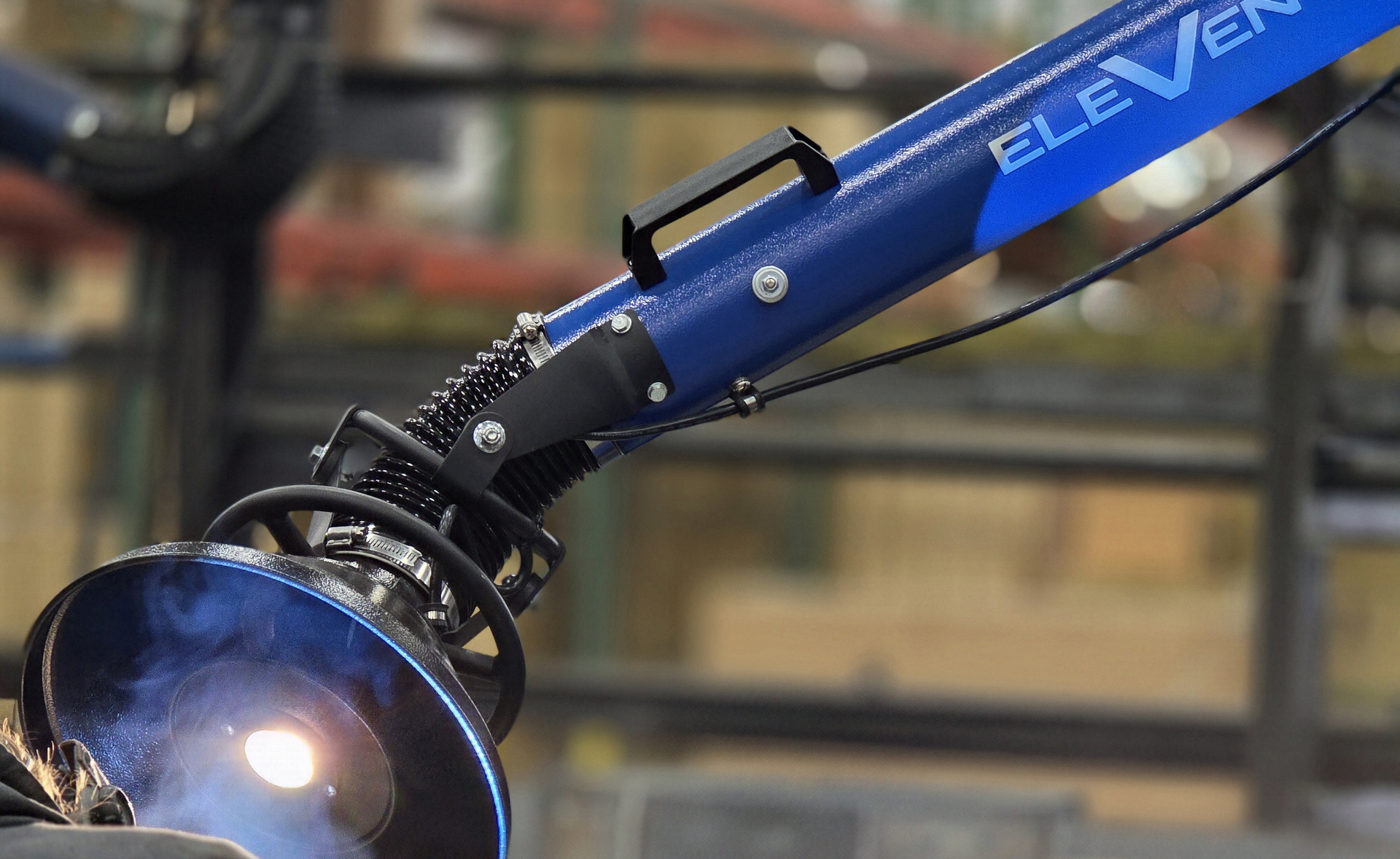
A welding fume extraction arm is an adjustable source-capture system designed to collect welding fumes directly at or near the point where they are generated.
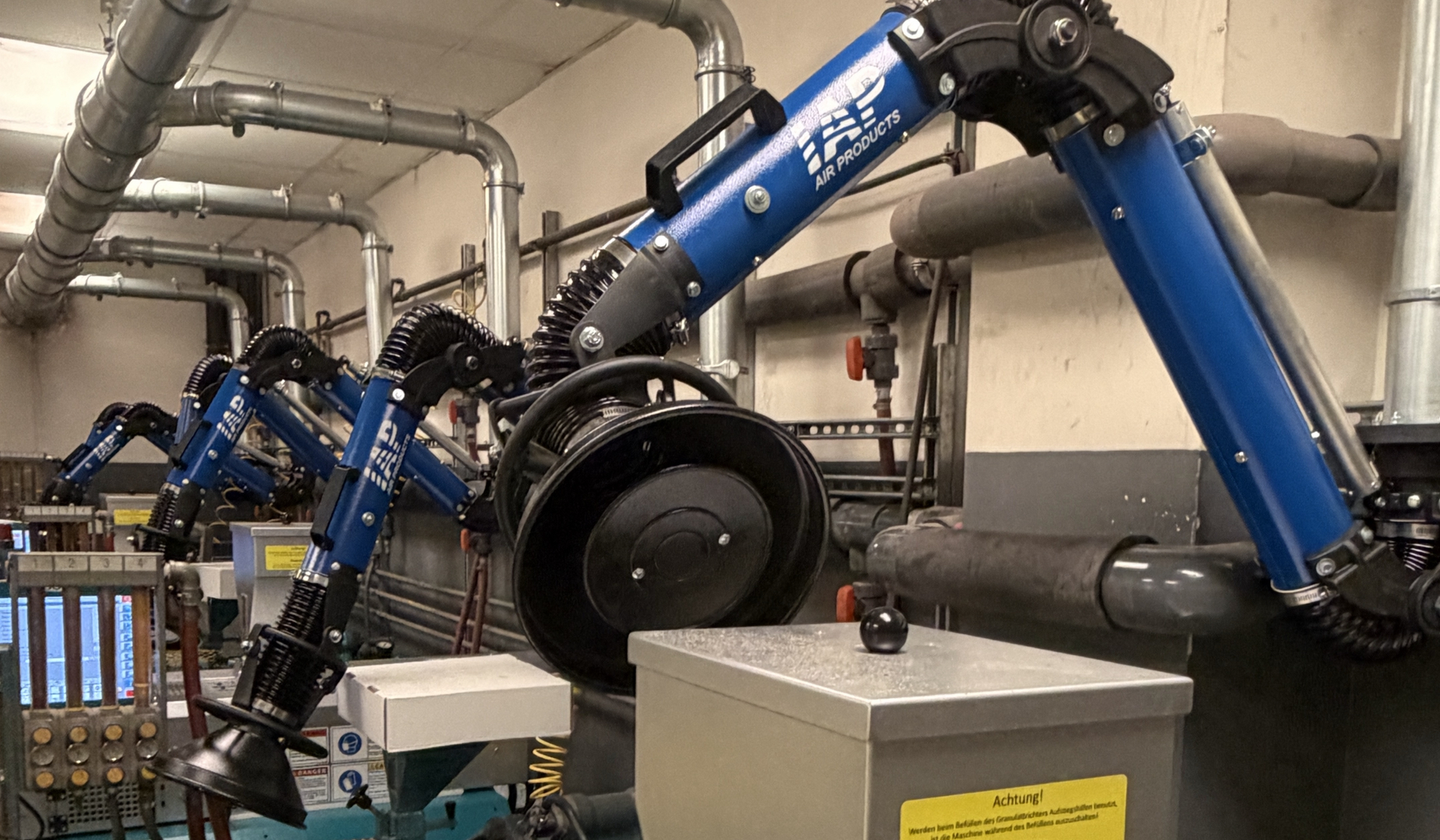
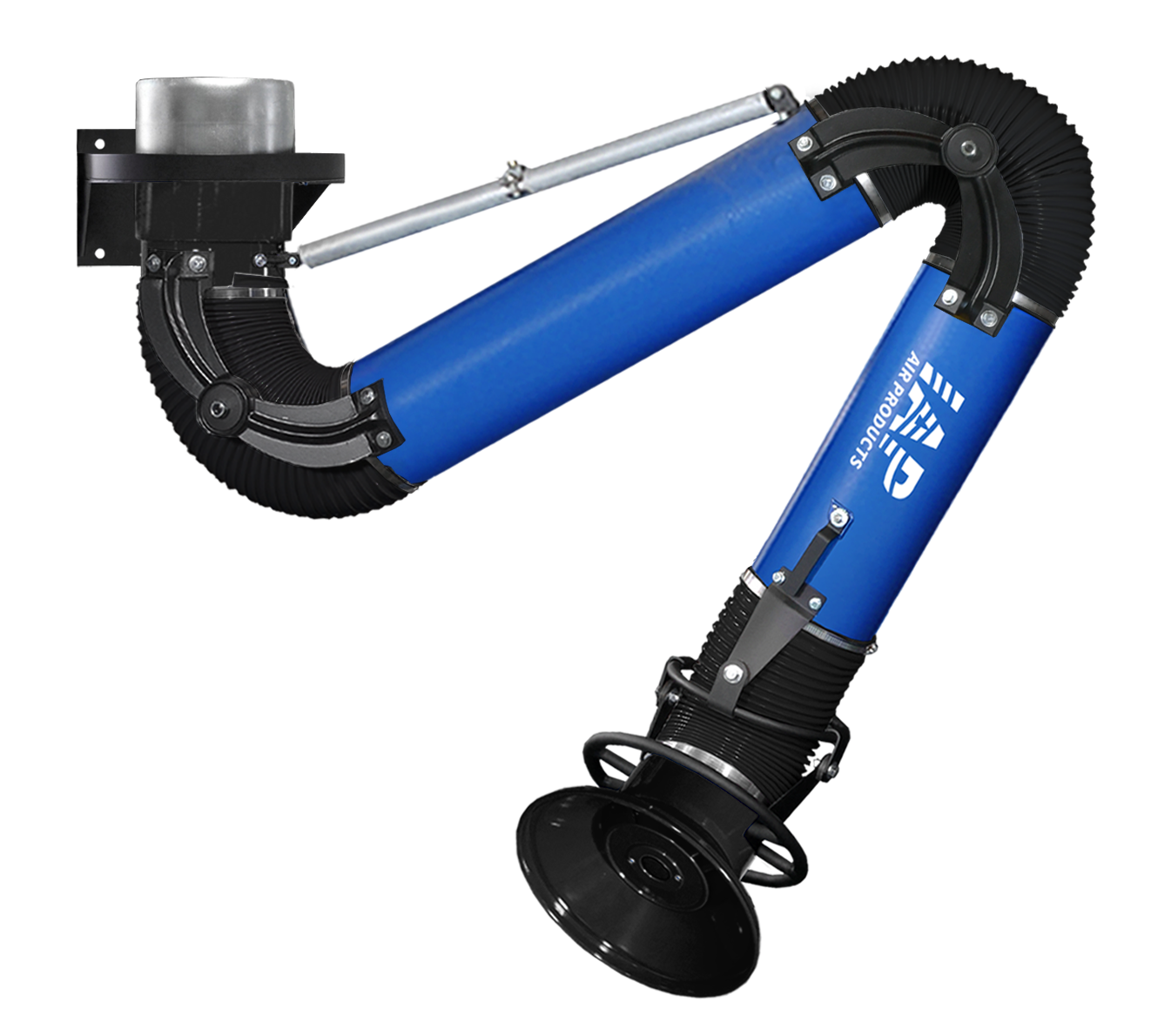
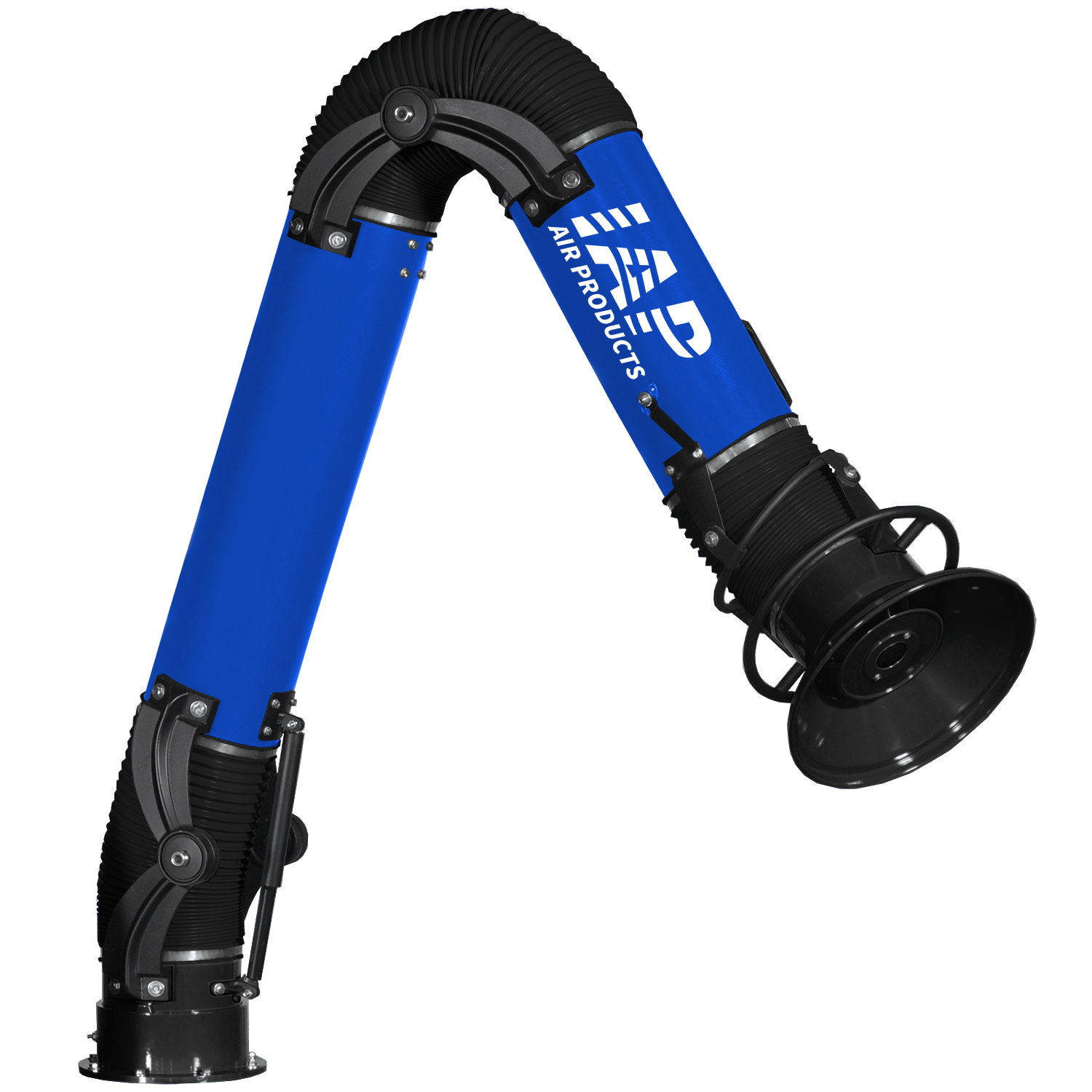
The arm typically consists of an articulated support structure, flexible duct or hose, and a capture hood. The hood is positioned near the welding arc, while a fan or filtration system creates the airflow needed to pull welding smoke and particulate through the arm.
Once captured, the contaminated air can be:
- Exhausted outside the facility
- Directed to a central dust and fume collection system
- Sent through a dedicated fume filtration unit
- Filtered through a mobile welding fume extractor
The goal is simple:
capture the fume before it becomes a breathing-zone or general-air problem.
Why Source Capture Is Important for Welding
There are several ways to approach welding fume control, including general ventilation, ambient air cleaners, downdraft tables and source capture.
Source capture has one major advantage: it removes the contaminant where it is generated.
Rather than trying to clean an entire building after welding fumes have dispersed, a fume extraction arm concentrates the airflow around the welding process. This allows the system to capture contaminants using a much more targeted airflow.
Industry guidance commonly identifies source capture as the preferred approach when the extraction hood can be positioned close enough to the welding process.
This is particularly valuable in:
- Welding booths
- Fabrication shops
- Manufacturing facilities
- Maintenance shops
- Automotive repair facilities
- Technical schools
- High school welding labs
- Vocational training centers
- Community colleges
- Welding training facilities
How Does a Welding Fume Arm Work?
The basic concept is straightforward.
A fan creates negative pressure within the extraction system. The capture hood is positioned near the welding arc and the airflow pulls welding smoke and airborne particulate into the hood.
The contaminated air then travels through the extraction arm and into the filtration or exhaust system.
The most important part of the process isn't necessarily the size of the fan.
It's where the hood is positioned.
As the distance between the hood and welding arc increases, the available capture effect decreases. Keeping the hood close to the source allows the system to capture welding fumes before they spread into the surrounding workspace.
For that reason, a good welding fume extraction arm should be easy for the operator to move and position.
How Close Should a Fume Extraction Arm Be to the Weld?
There isn't one universal distance that works for every welding application. The correct position depends on the hood design, airflow, welding process, surrounding air movement and the size of the capture area.
As a general rule,
the closer the hood can be positioned to the welding arc without interfering with the welder, the better.
Many applications position the hood approximately 6–12 inches from the welding area, while some applications may require different positioning based on the system design and airflow requirements.
The arm should also be repositioned as the welding work moves.
A common mistake is installing a fume arm and expecting it to capture everything from a fixed position. The hood needs to follow the welding operation so that it remains close to the source.
Hanging Fume Arms vs. Standing Fume Arms
One of the biggest decisions when selecting a welding fume extraction arm is how the arm will be mounted.
Choosing the Right Welding Fume Extraction Arm
Not every welding application requires the same size fume arm.
The correct system depends on several factors, including:
1. Welding Process
MIG, TIG, stick, flux-cored, and other welding processes can produce different amounts and types of fumes.
2. Welding Volume
A school welding booth used for occasional training has very different requirements than a production welding station operating throughout an entire shift.
3. Hood Position
How close the hood can be positioned to the weld is one of the most important factors when determining the required airflow.
4. Arm Reach
The arm needs enough reach to cover the operator's working area without requiring constant repositioning or stretching.
5. Airflow Requirements
The fan, ductwork, filtration equipment and extraction arm all need to work together. Selecting an arm based solely on its diameter without considering the entire system can lead to poor performance.
6. Filtration
If the air will be returned to the facility, the filtration system becomes especially important. Filter type, efficiency, filter surface area, maintenance requirements and the contaminants being captured should all be considered when designing the system.
Welding Fume Extraction Arms vs. Ambient Air Cleaners
Ambient air cleaners and welding fume extraction arms serve different purposes.
A welding fume extraction arm is a source-capture device. It is designed to capture fumes at the welding process.
An
ambient air cleaner filters the general air throughout a room.
For example, a welding school may use a fume extraction arm at every welding booth while also using an ambient air cleaner to help control the airborne particulate that escapes source capture.
These systems aren't necessarily competitors. In many facilities, they work best together.
Source capture removes welding fume at the point of generation. Ambient filtration helps clean the remaining airborne particulate in the surrounding workspace.
Welding Fume Extraction for Schools and Training Facilities
Welding fume extraction arms are particularly well suited for technical schools, high schools, vocational programs and welding training centers.
Training environments often have multiple welding booths operating at the same time. Students are also learning proper welding technique and workplace safety, making an effective and easy-to-use extraction system an important part of the welding lab.
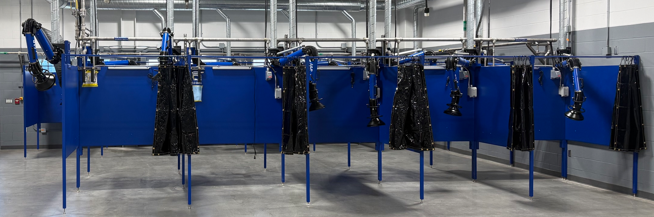
Hanging fume arms are especially popular in these applications because they can be mounted directly to individual welding booths while keeping the floor area open.
IAP Air Products' WELDSHELL welding booths can be equipped with hanging fume arm brackets and fume arm filtration systems to create complete source-capture welding stations.
Why Choose a Quality Fume Extraction Arm?
A welding fume arm needs to do more than simply move air.
It needs to remain where the operator positions it, provide a practical range of motion, withstand the demands of the work environment, and maintain an effective airflow path.
A poorly designed or difficult-to-position arm may technically provide extraction, but if the welder doesn't want to use it, the system isn't doing its job.
That's why maneuverability, durability, reach, hood design, airflow and installation configuration all matter when selecting a welding fume extraction system.
IAP Welding Fume Extraction Arms
IAP Air Products manufactures and stocks welding fume extraction arms for a wide range of applications, from individual welding stations to large technical education facilities and industrial welding operations.
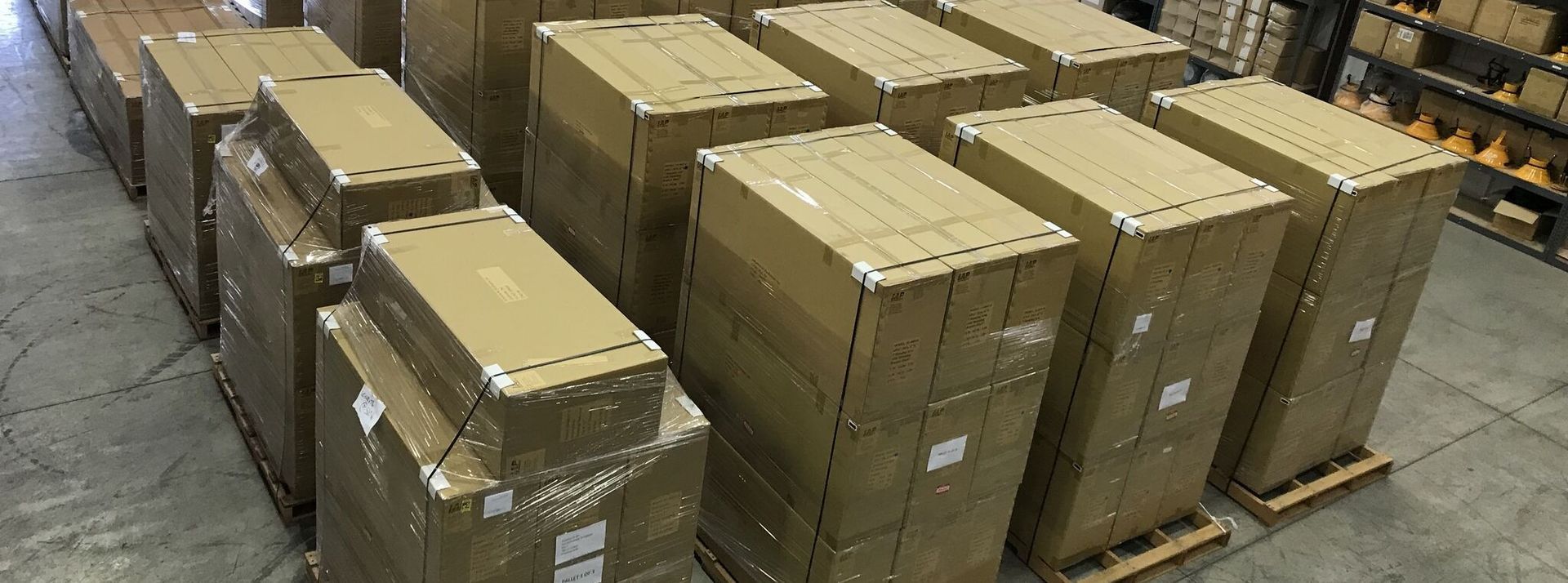
Our product lineup includes hanging, standing, stainless steel and telescopic fume extraction arms in multiple diameters and configurations. IAP maintains thousands of welding fume arms in stock, allowing many standard products to ship quickly rather than requiring customers to wait weeks for production.
Whether you're building a new welding lab, upgrading an existing fabrication shop or adding source capture to individual welding stations, the right fume extraction arm can make a significant difference in how effectively welding fumes are controlled.
Need Help Selecting a Welding Fume Extraction Arm?
The right welding fume extraction system depends on the application—not simply the size of the welding booth or the horsepower of the fan.
IAP Air Products can help determine the appropriate fume arm diameter, length, hood configuration, airflow, filtration and mounting method for your application.
From individual welding stations to complete technical school welding labs, our team can help you design a source-capture system around the way your facility actually works.
Looking for a welding fume extraction arm? Contact IAP Air Products to find the right source-capture solution for your application.