Preparing the Next Generation of Welders

January 21, 2025

How Welding Booths Support Hands-On Learning

The art of welding is an essential skill in industries ranging from construction to automotive manufacturing, and its demand continues to grow as the need for skilled tradespeople increases. To meet this demand, schools and training facilities play a critical role in preparing the next generation of welders. A vital component in fostering this development is the proper use of welding booths, which create safe, effective, and professional learning environments.

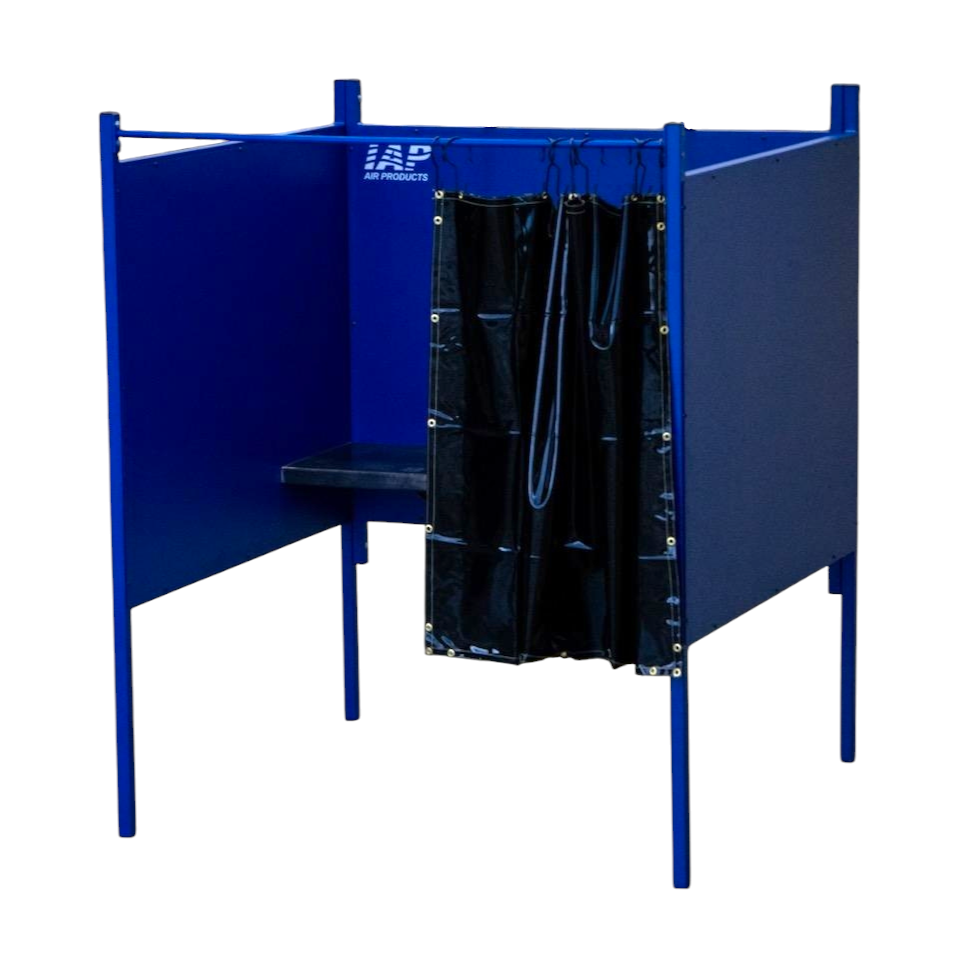
Weld Booths in education

Creating a Safe Learning Space

Safety is the cornerstone of any successful welding program. Welding booths are designed to isolate students and their projects from the surrounding environment, significantly reducing potential hazards. By containing sparks, fumes, and intense light, these booths protect both the welder and others in the training facility. Features like proper ventilation systems further enhance safety by ensuring harmful fumes are extracted efficiently, minimizing exposure to dangerous gases.


In addition to physical safety, welding booths also contribute to psychological safety for students. For beginners, welding can be intimidating. A well-designed booth provides a contained and controlled space, allowing students to focus on their work without fear of distractions or judgment from peers. This focused environment is critical for building confidence and mastering foundational techniques.

Weld Booths used in education

Hands-On Experience: The Key to Learning

Welding is a skill that cannot be fully learned through textbooks or videos alone. Hands-on practice is essential for developing the precision and muscle memory required for quality welds. Welding booths offer students a dedicated workspace to practice their craft repeatedly, enabling them to experiment, make mistakes, and improve under the guidance of instructors.


By replicating real-world work environments, these booths help students prepare for what they will encounter on the job. Students become accustomed to working in confined spaces, managing tools, and maintaining proper posture—all of which are critical skills in professional welding.

Adapting to Different Learning Environments

One of the greatest advantages of welding booths is their adaptability to various educational settings. Training facilities often cater to diverse class sizes and skill levels, and welding booths can be tailored to meet these needs. Booths come in various sizes to accommodate different projects, and their modular designs make it easy for schools to reconfigure layouts as programs expand.

For institutions with limited budgets, shared-panel designs offer cost-effective solutions without compromising safety or quality. These features ensure that schools can maximize their resources while still providing students with professional-grade training environments.


Preparing for a Brighter Future

As welding technology evolves, so too must training facilities. Modern welding booths are designed to integrate seamlessly with advanced tools and techniques, from fume extraction arms to virtual welding simulators. By incorporating these innovations, schools can better prepare students for the demands of today’s industry.

Investing in proper welding booths is not just about meeting current educational needs; it is about shaping the future workforce. By providing students with a safe, hands-on, and adaptable learning environment, schools and training facilities empower the next generation of welders to excel in their craft and contribute to industries that build our world.

Whether it’s a high school welding program or a technical college training facility, the impact of quality welding booths cannot be overstated. They are the foundation of a comprehensive education, ensuring that students leave with the skills, confidence, and readiness to succeed in their careers.

SHARE THIS POST

Source Capture vs Ambient Capture in welding fume extraction applications.
March 2, 2026
This article by IAP, describes how a fume extraction arm outperforms a canopy hood in welding & industrial applications. It covers a real-world example; comparing airflow efficiency, flexibility and control. A side by side comparison is included.
ELEVENT fume extraction
February 12, 2026
When evaluating a welding fume extractor, it’s easy to be drawn to large CFM numbers. What often isn’t clear is where that airflow is measured. In many cases, those numbers are tied to motor ratings, not the airflow available at the hood where fume capture actually occurs. This article helps explain this.
EleVent, ViperVex and WeldShell
January 28, 2026
The IAP team recently attended the ACTE CareerTech VISION trade show. If you’ve ever been to an ACTE event, you know the energy is on another level—it’s a massive gathering of people who are genuinely passionate about vocational training & getting the next generation ready for the workforce.