Source Capture vs Ambient Capture
Why a fume extraction arm outperforms a canopy hood in welding & industrial applications
1. Source Capture vs. Ambient Capture
The biggest difference is where the fumes are captured.
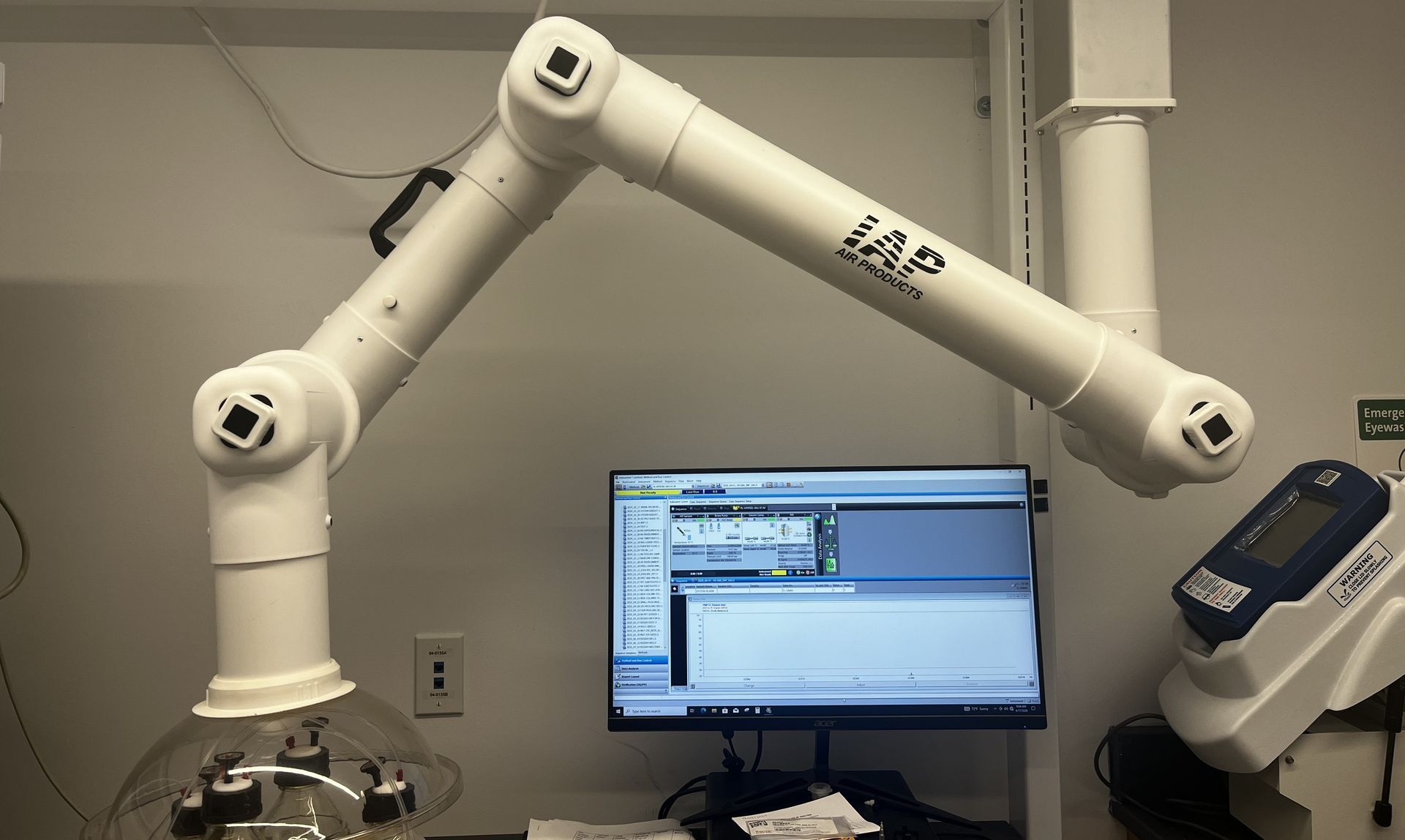
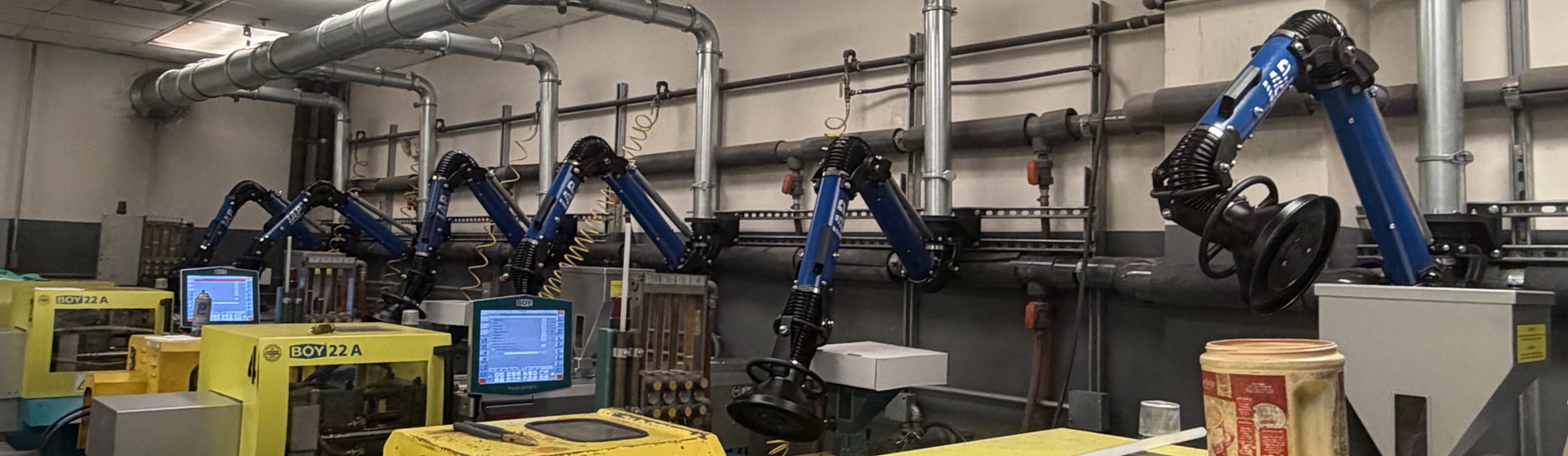
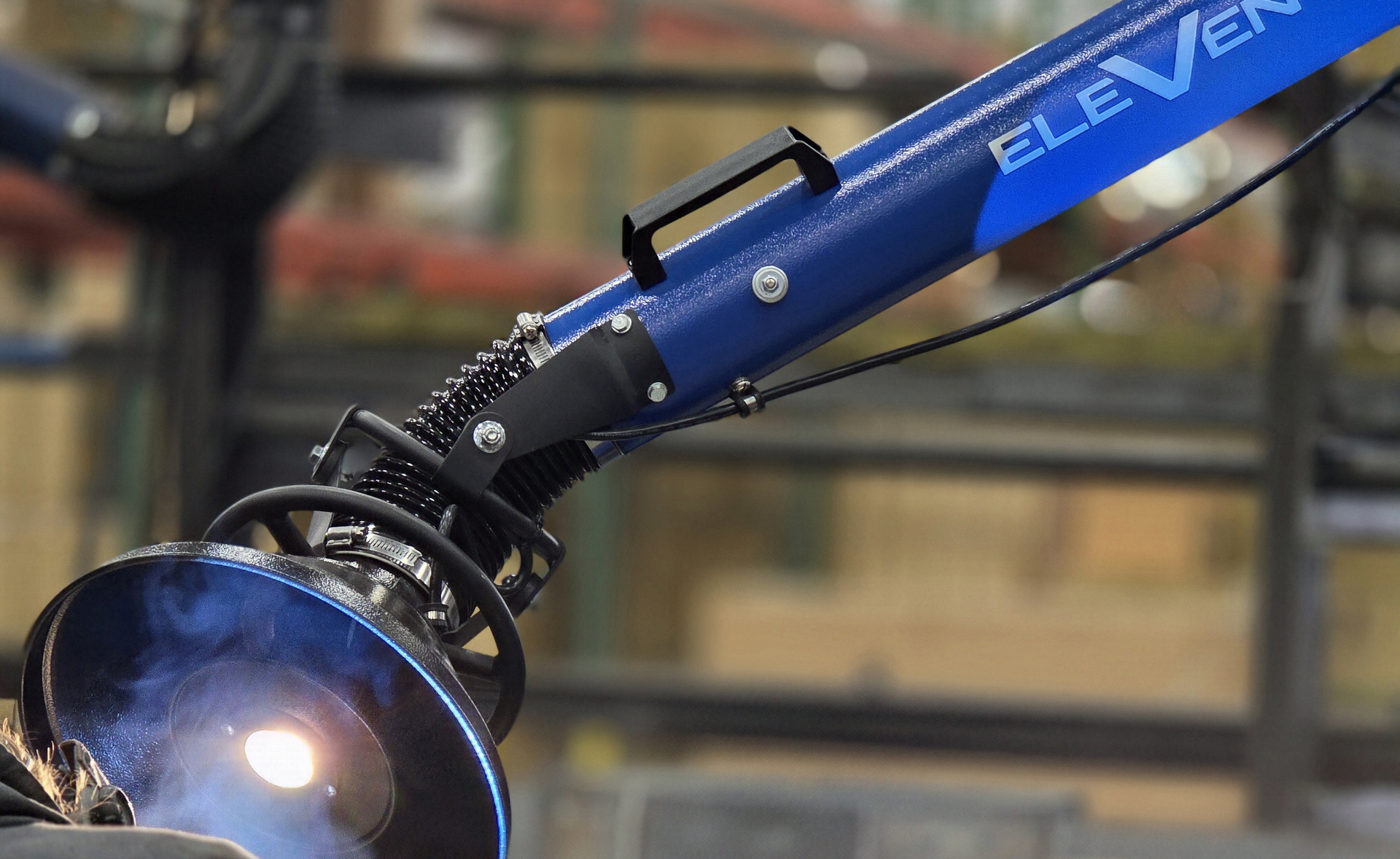
- Fume Extraction Arm: Captures contaminants directly at the arc—before they rise into the breathing zone.
- Canopy/Hood: Captures fumes after they’ve passed the welder’s face and risen toward the ceiling or booth opening.
Because hot weld fumes naturally rise, canopy systems depend on thermal lift and room air currents. Any cross-draft, fan, or open bay door can disrupt performance. A fume arm positioned 6–12 inches from the arc captures fumes immediately and consistently.
2. Real-World Example: 4' x 4' Welding Booth
Let’s put numbers behind this.
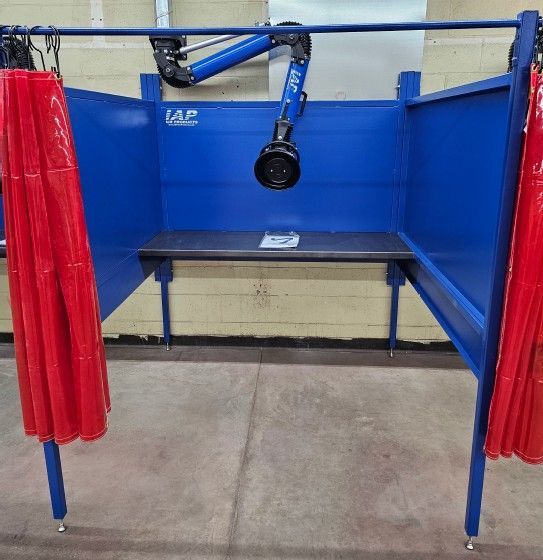
4" Fume Extraction Arm at 300 CFM
- Duct Diameter: 4 inches
- Airflow: 300 CFM
That’s over 3,000 feet per minute (FPM) of concentrated capture velocity directly at the source.
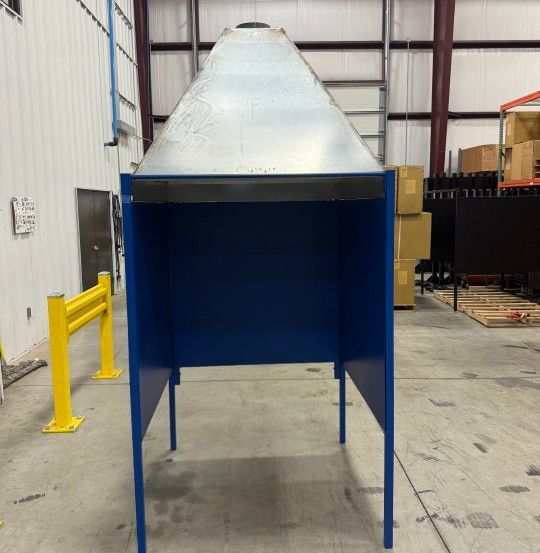
4' x 4' Booth Hood at 100 FPM
4 ft × 4 ft = 16 sq ft
Required airflow:
16 sq ft × 100 FPM = 1,600 CFM
To achieve just 100 FPM face velocity, the hood needs more than 5x the airflow of the fume extraction arm.
Side-by-Side Comparison
| Specification | 4" Fume Arm | 4' x 4' Hood |
|---|---|---|
| Airflow | 300 CFM | 1,600 CFM |
| Air Velocity | ~3,450 FPM | 100 FPM |
| Capture Type | Source Capture | Ambient/Front Capture |
| Energy Demand | Low | High |
3. Airflow Efficiency
Because a canopy hood pulls contaminated air from farther away, it must move significantly more air to be effective.
That means:
- Larger horsepower fan
- Bigger ductwork
- Larger collector
- Increased makeup air requirements
- Higher electrical consumption
A fume arm delivers stronger capture with a fraction of the airflow.
4. Worker Exposure Reduction
Organizations like OSHA and NIOSH emphasize minimizing exposure at the source whenever possible. Source capture systems align with the hierarchy of controls by removing contaminants before they enter the breathing zone.
With a hood:
- Fumes pass directly by the welder’s face
- Ambient contamination increases
- Nearby workers may be exposed
With a fume arm:
- Fumes are removed immediately
- Air quality across the shop improves
- Other processes remain less affected
5. Flexibility & Control
- Fume arms are adjustable and repositionable, making them ideal for varied weld sizes and layouts.
- Canopy hoods are fixed in place. If the weld table moves or part size changes, performance drops immediately.
- For fabrication shops, maintenance departments, and schools with multiple welding stations, flexibility matters.
The Bottom Line
In a 4' x 4' booth example:
- A 4" fume arm uses 300 CFM to generate over 3,000 FPM of focused capture velocity.
- A hood requires 1,600 CFM just to achieve 100 FPM across the opening.
If the goal is maximum protection, lower energy use, and better capture efficiency, source capture wins — every time.
WELDSHELL
4'x4' Booth with Canopy Hood
WELDSHELL
4'x4' Booth with 4"x5' Arm
SHARE THIS POST